Observe the night sky together.

Moonbeam Astronomy Club shares clear sky notes, constellation guides, and meetup updates for curious observers of every experience level.

  • Guided local observing
  • Beginner-friendly sky guides
  • Shared notes after each session
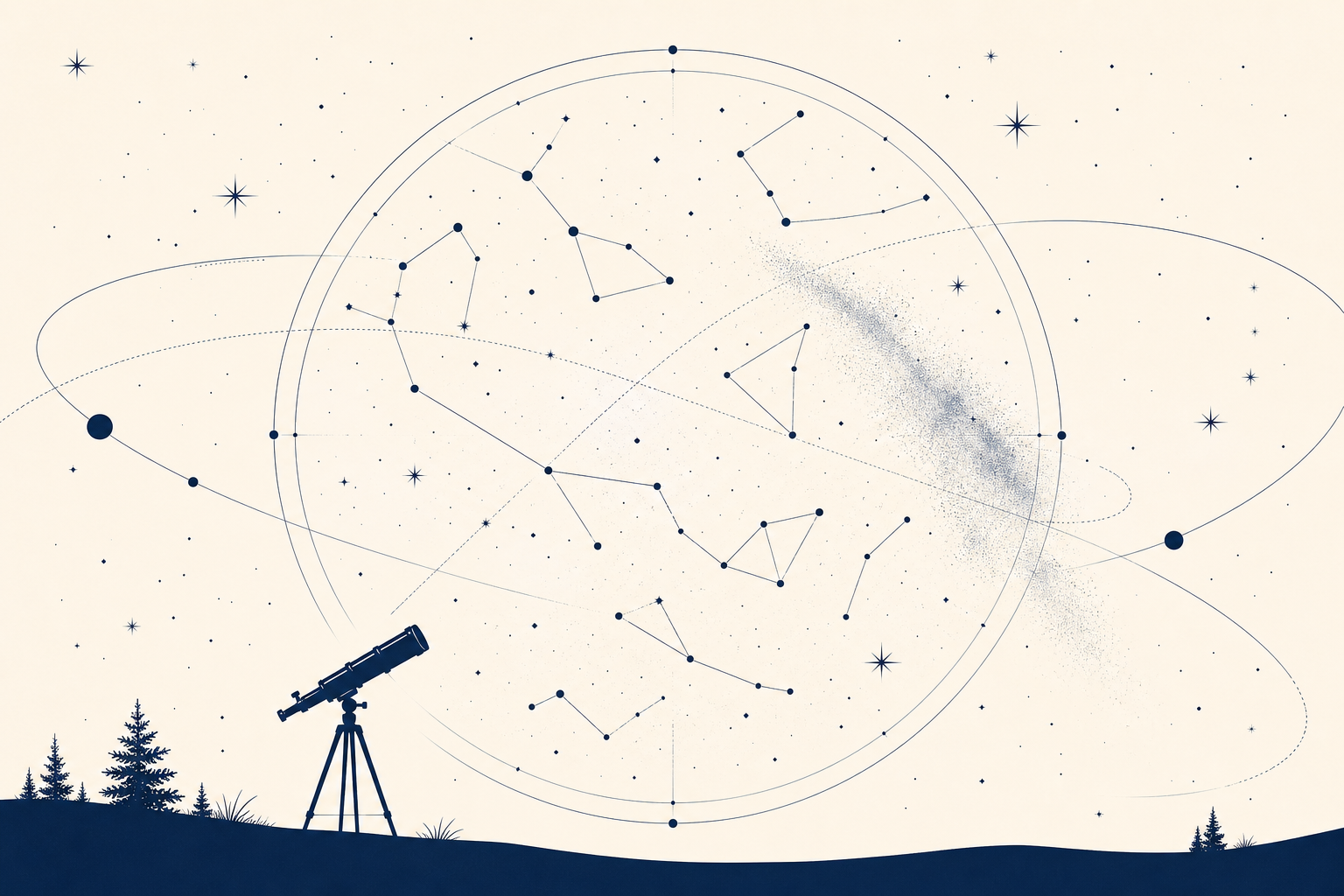
Refined celestial star map diagram with thin constellation lines, star dots, orbital arcs, and a small telescope silhouette in deep navy on a soft cream field.

Club highlights

What youll find here

Three practical ways to follow the sky with us: field-ready observation notes, approachable constellation learning, and local meetup updates.

Observation journal

Recent sky notes

Short field notes from volunteer sessions: what the sky looked like, what we aimed at, and what helped most in practice.

19 September 2026

Early-autumn Moon + Saturn window

Conditions
Cool and steady air after 21:30, thin haze near horizon, good transparency overhead.
Target
Waxing Moon terminator details, then Saturn at medium magnification.
Takeaway
Waited 20 minutes for rooftop heat to settle; image sharpness improved more than changing eyepieces.

14 January 2026

Clear winter Orion session

Conditions
Dry, transparent sky with low wind; seeing average but stable enough for repeated looks.
Target
Orion Nebula core and belt stars as a reference for beginner star-hops.
Takeaway
Starting with naked-eye belt alignment made telescope pointing faster for first-time members.

02 March 2026

Neighborhood binocular bright-star pass

Conditions
Urban glow present, but broad clear gaps between passing thin clouds.
Target
Aldebaran, Capella, Castor and Pollux sweep with 8x42 binoculars.
Takeaway
Using two-star checkpoints kept orientation easy even with intermittent cloud cover.

Next evening observation session

Our next skywatch is this Saturday at the lakeside field, beginning at dusk with a short orientation before open telescope viewing.

Weather flexibility and update timing

If cloud cover shifts, we post final location and timing updates by 4:00 PM on meetup day in the latest club note.

What newcomers can expect

You will find a friendly check-in, beginner telescope tips, and quiet group observation periods with time for questions.

Questions first-time observers often ask

Quick answers to help you feel prepared, whether this is your first night under the stars or your first time joining our group.

Are beginners welcome at club observing nights?

Yes. Beginners are always welcome, and experienced members are happy to help with basic sky orientation and simple observing tips.

Do I need to bring a telescope?

No telescope is required. You can come with just your eyes and curiosity, and members usually share views through their equipment.

What happens if the weather changes?

We monitor forecasts and post updates before meetup time. If conditions are poor, we may shorten, reschedule, or switch to an indoor discussion.

How often does the club meet?

Most months include one primary observing meetup, plus occasional bonus sessions for major celestial events announced on the schedule.

Can families attend together?

Yes, families are welcome. We recommend that younger attendees come with supervision and dress for cool evening conditions.